
NEAT: The Hidden Exercise That Burns More Than Workouts
NEAT (Non-Exercise Activity Thermogenesis) — daily movement outside formal exercise — may burn more calories than your gym sessions. Learn how to increase NEAT for diabetes reversal and fat loss.
Introduction: The Exercise You're Doing All the Time (Or Not)
Most people think about physical activity in two buckets: exercise (the gym, the running track, the yoga class) and everything else (sitting, lying down, watching TV). Health advice has traditionally focused on bucket one: exercise more.
But there is a third bucket that has been largely invisible in mainstream health advice — and it may matter more for metabolic health than formal exercise. This bucket is called NEAT: Non-Exercise Activity Thermogenesis.
NEAT encompasses all the energy you burn through physical activity that is not formal exercise: walking to the bathroom, fidgeting in your chair, carrying groceries, doing household chores, standing at a counter, climbing stairs, gesturing while talking. These activities individually seem trivial. Collectively, they can account for hundreds or thousands of kilocalories per day — and their effect on blood glucose is continuous and cumulative.
For people with Type 2 diabetes and insulin resistance, NEAT may be as therapeutically important as any formal exercise program.
The Dramatic Differences in NEAT Between People
Landmark research by Dr. James Levine at the Mayo Clinic discovered something startling: lean individuals sit approximately 2.5 hours fewer per day than obese individuals — not because of formal exercise, but because of NEAT. Lean people stand more, pace more, fidget more, and move more throughout every hour of the day.
This NEAT difference was found to account for approximately 350–400 kilocalories per day in energy expenditure difference — more than most people burn in a 30-minute gym session.
Over a year, this 350-calorie daily NEAT deficit adds up to the caloric equivalent of 16–20 kg of stored fat. The key insight: formal exercise typically accounts for 100–300 kilocalories per session, 3–5 times per week. NEAT operates every waking hour of every day.
NEAT and Blood Glucose: The Continuous Connection
From a blood glucose management perspective, NEAT has a unique advantage over concentrated formal exercise: it distributes muscle activity across the entire day, providing continuous GLUT4-mediated glucose uptake rather than a single concentrated period.
CGM data in research studies consistently shows that people who break up sitting with brief movement bouts every 30–45 minutes have:
- Lower 24-hour average glucose (time in range)
- Smaller post-meal glucose spikes
- Better overnight glucose recovery
- Lower fasting insulin the next morning
The metabolic hazard of prolonged, unbroken sitting is significant and largely independent of overall exercise volume. Sitting for 8 consecutive hours in your office negates many of the metabolic benefits of your morning gym session. The solution is not more gym time — it is breaking up the sitting.
Practical NEAT Strategies for Urban Indians
Office and work environment
- Stand during phone calls — most phone calls can be taken standing or while pacing
- Walk to colleagues' desks instead of messaging or emailing
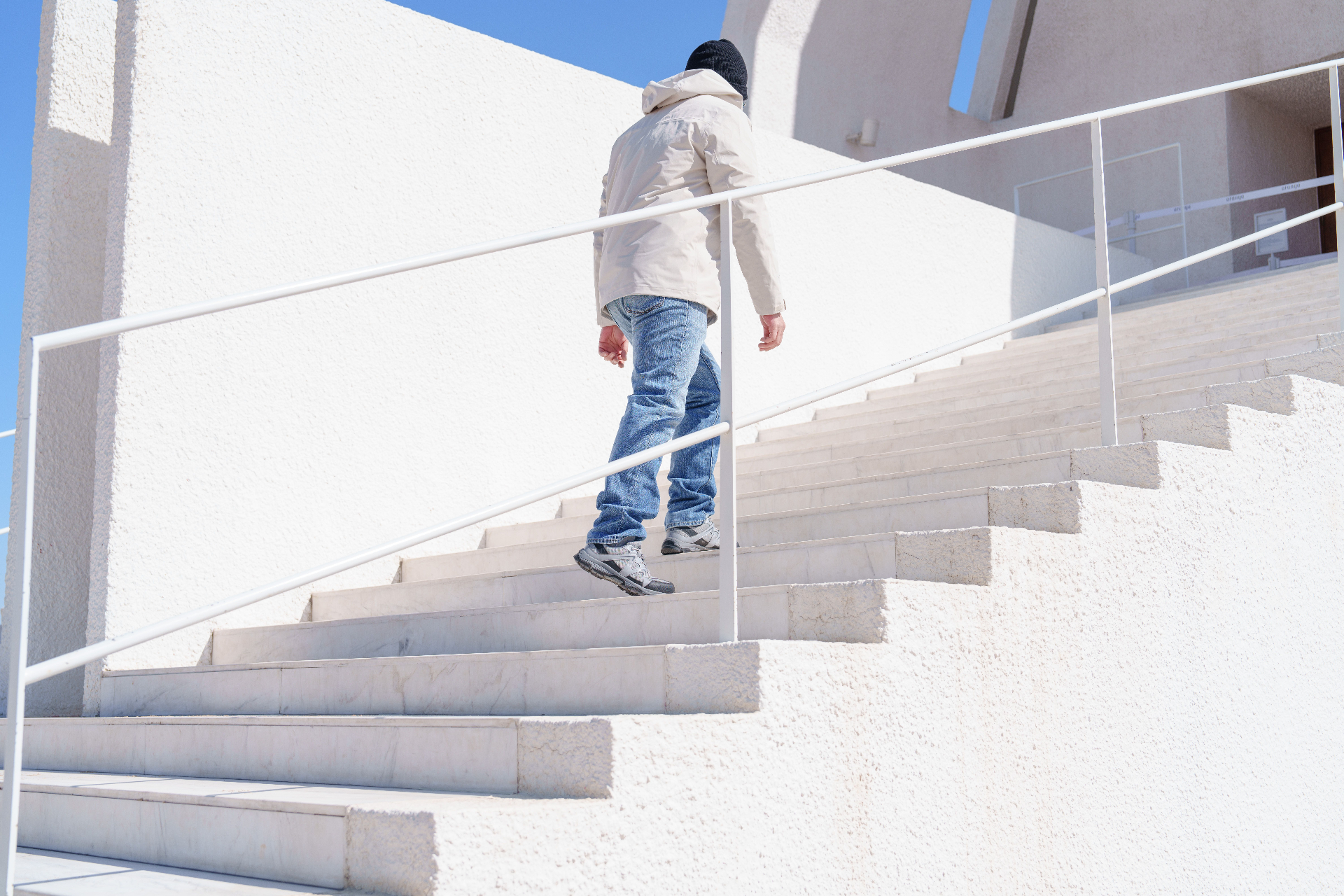
- Take the stairs, always — elevators are NEAT killers
- Stand at the counter during lunch instead of sitting
- Walk during a portion of lunch break
- Request a standing desk or improvise with a high shelf or counter
Home environment
- Stand while watching TV — or at least every commercial break
- Do household chores actively — sweeping, mopping, cooking, gardening all involve significant NEAT
- Place commonly used items at a distance from your work area so you have to walk to get them
- Walk while on the phone
- Walk to nearby destinations instead of driving
Commuting
- Get off one stop early and walk the rest
- Walk to the furthest parking spot
- Cycle for short distances
- Use public transport (involves significantly more walking than car use)
The movement snack protocol
Set a timer for every 30–45 minutes during sedentary work periods. When the timer goes off: 2–3 minutes of walking (office corridor, home walkway), 10–15 standing calf raises, a brief standing stretch. These add up to 30–45 minutes of additional light activity per day — entirely through incidental movement, with no gym time required.
Measuring Your NEAT
The simplest NEAT measurement tool is a basic pedometer or any smartphone step counter:
- Below 5,000 steps/day: Sedentary — associated with the highest insulin resistance
- 5,000–7,500 steps/day: Low activity — some metabolic benefit
- 7,500–10,000 steps/day: Moderately active — meaningful improvement in insulin sensitivity
- 10,000–12,000 steps/day: Active — strong metabolic benefit
- Above 12,000 steps/day: Very active — maximum NEAT benefit
Most urban Indian office workers take 3,000–5,000 steps daily. The goal of 10,000 steps is actually achievable through NEAT strategies alone — without any formal exercise.
Get the BBDO app the day it launches.