
A BBDO plate is built, not portioned. Vegetables first, always.
Food.
Your plate is the dose.Get it right and the medicine cabinet shrinks.
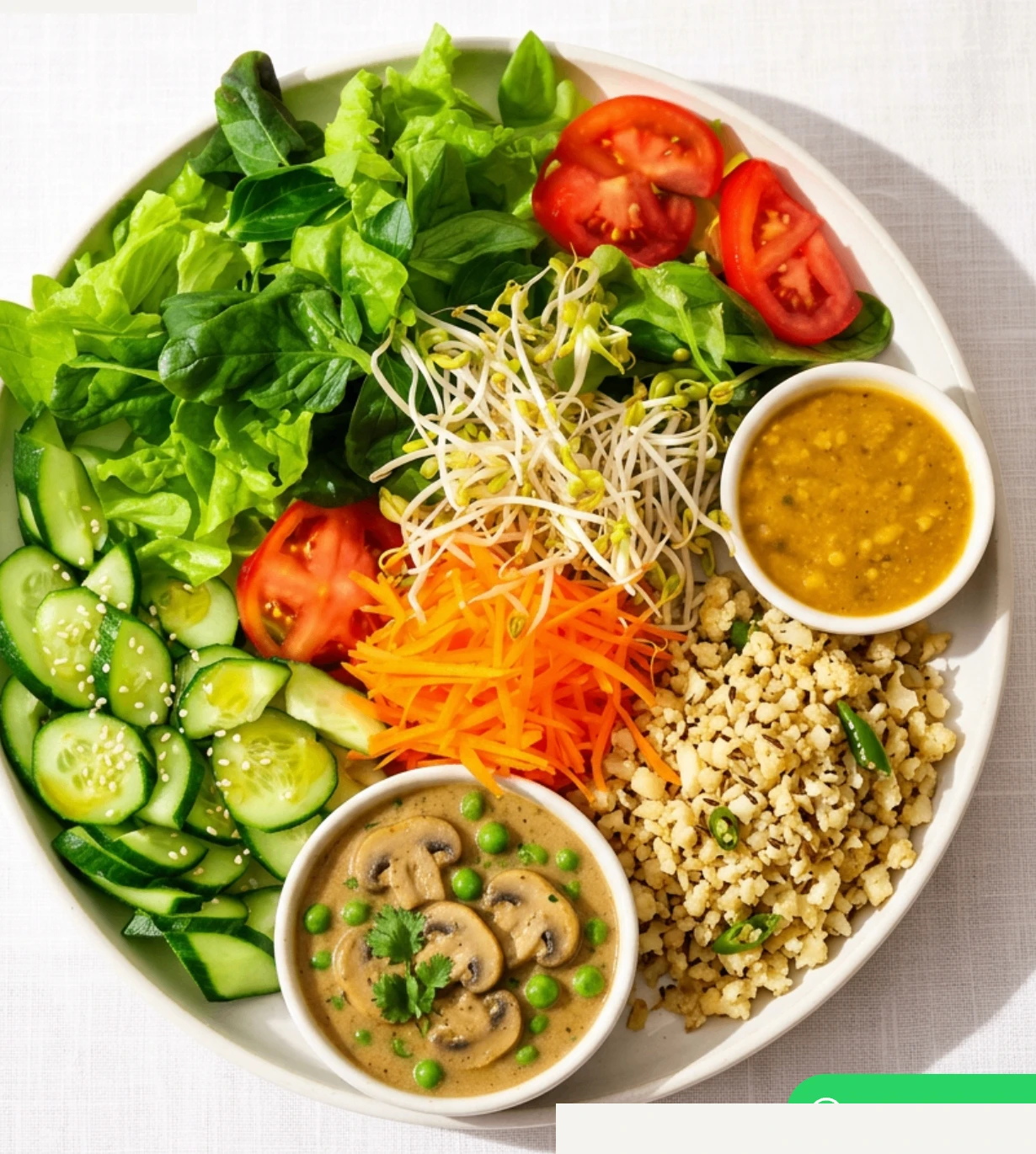
The benefits,stacked.
- Flattens the post-meal glucose spike by 20–35%
- Reduces triglycerides and liver fat
- Improves satiety - reducing the urge to snack
- Takes the pressure off an overworked pancreas
- Sustainable - built around foods you already love.
The problem on your plate
The average urban Indian meal is 65–75% refined carbohydrate by calorie - polished rice, maida rotis, sugary chai, evening biscuits. Each meal triggers a sharp glucose spike, the pancreas overshoots insulin, fat is locked into storage, and four hours later you're hungry again. Repeat three times a day for fifteen years and you have a country with the world's second-largest diabetic population.
It's not the rice. It's the ratio, the fibre, and the order in which the food enters your stomach.
The BBDO half-quarter-quarter plate
- Half the plate: non-starchy vegetables - sabzi, salad, raita, sprouts.
- A quarter: protein - dal, paneer, eggs, fish, chicken, tofu.
- A quarter: smart staples - cauliflower rice, millets (ragi, jowar, foxtail), or a millet/almond roti.
- A thumb of essential fat: ghee, cold-pressed oil, nuts, seeds.
Eat in this order, every meal
Salad first. Protein second. Carb last. The fibre forms a mesh that slows glucose absorption, the protein triggers GLP-1 (your body's natural Ozempic), and by the time the carbohydrate hits your bloodstream, the curve is already buffered. CGM data from 2,000+ BBDO members shows a 22–35% lower peak from sequencing alone.
Three Simple Swaps. Big Metabolic Impact.
- White rice → cauliflower rice, starch-reduced refrigerated rice, or millet flours.
- Sugary cereals → overnight oats with chia, cinnamon, and walnuts.
- Jaggery chai → lactose-free chai with a touch of stevia or monk fruit.
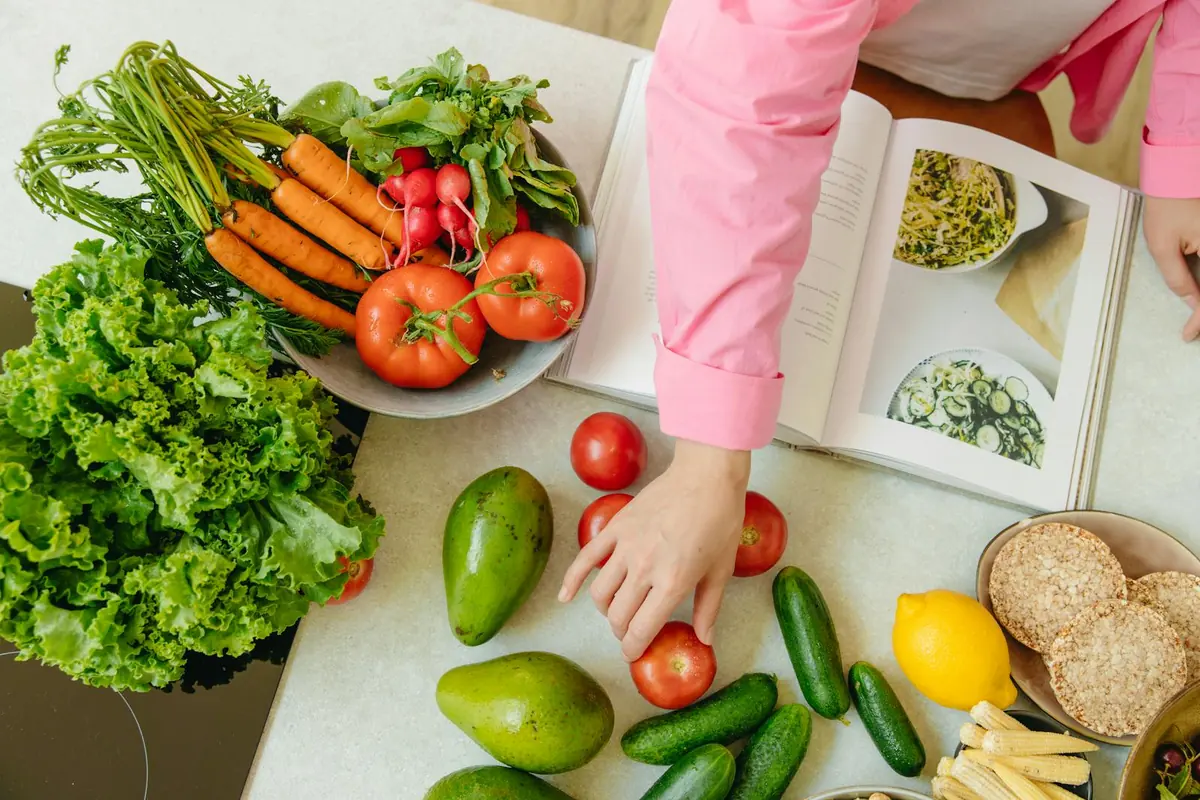
What to stop, today
- Liquid sugar – fruit juices, soft drinks, milkshakes, energy drinks, sweet lassi, flavoured milk, and sweetened yoghurt.
- Refined seed oils – favour ghee and cold-pressed oils such as mustard, EVOO, coconut, groundnut, sesame, and avocado oil.
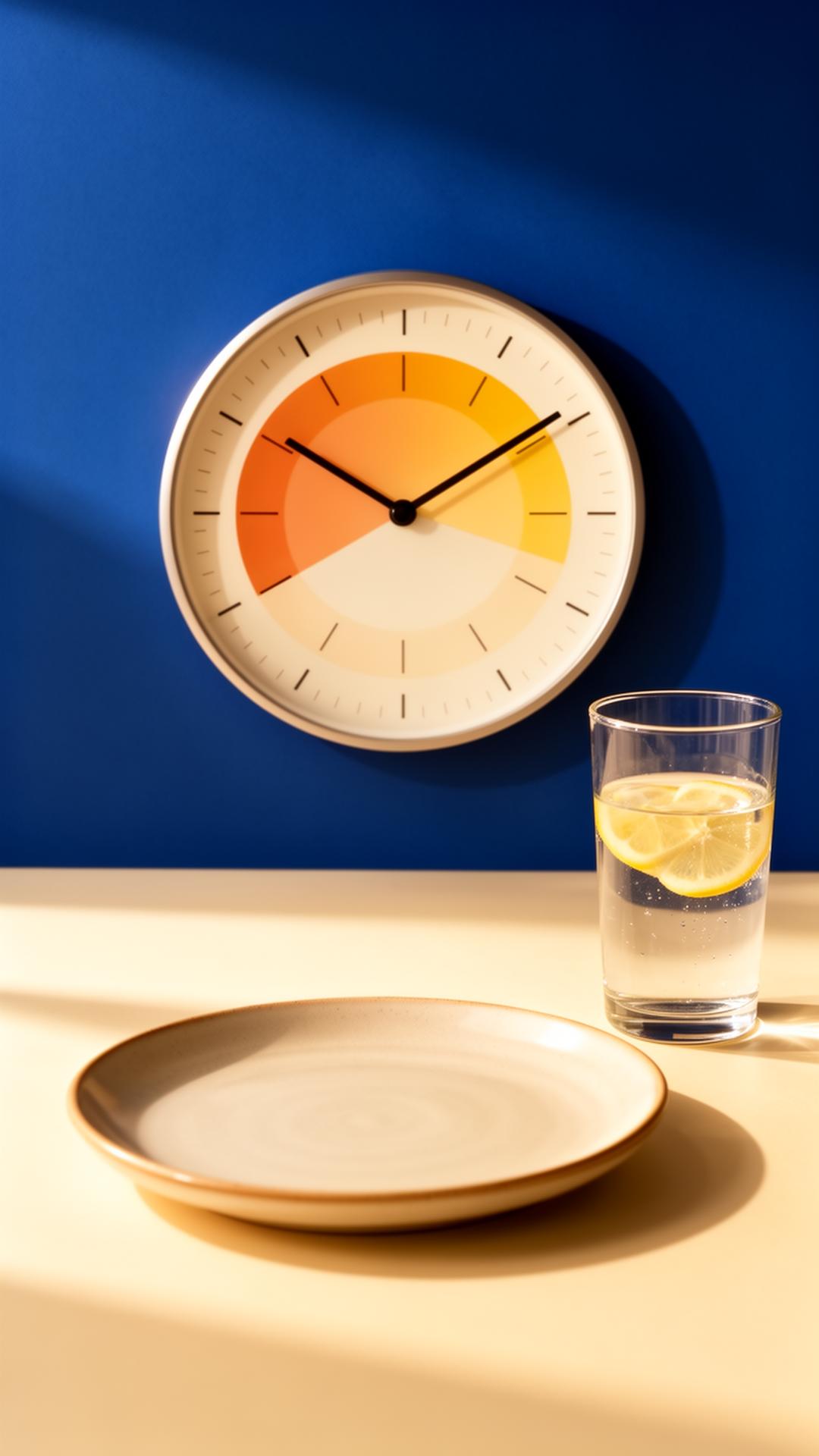
- Late-night snacking – avoid eating after 8 pm. Your metabolism is winding down; your kitchen should close down too.
"The Indian plate was never the problem. We simply drifted away from the way our grandmothers combined, cooked, and ate their food."
Try this for 7 days
Pick one meal a day. Apply the half-quarter-quarter rule. Eat in order: salad → protein → carb. Walk for ten minutes within thirty minutes of the last bite. Track fasting glucose every morning. Most BBDO members see a 12–18 mg/dL drop in fasting glucose within a single week—and that's before fasting, movement, supplements, or stress management begin to exert their full effect.
Get the BBDO app the day it launches.
Questions about Food.
The most common questions members ask about the Food pillar.
Yes. You don't have to completely give up rice or roti. Instead, we gradually optimize the ratio, the variety, and the order in which you eat them. Ratio: Half your plate is vegetables, with adequate protein and a controlled portion of carbs. Variety: We shift toward lower-GI options such as cauliflower rice, millets, and multigrain rotis made with almond flour, coconut flour, and other nutrient-dense ingredients. Order: Eat salad/vegetables first, protein next, and carbohydrates last to help reduce glucose spikes. These simple changes help flatten post-meal blood sugar rises without making your meals feel restrictive or unfamiliar. As your body adapts and your metabolic health improves, we continue to fine-tune your nutrition plan to support a metabolic reset, lower insulin resistance, and improve blood sugar control, while keeping your meals practical and enjoyable.
Half the plate is non-starchy vegetables, a quarter is essential protein (dal, paneer, eggs, fish, chicken, tofu), a quarter is a smart staple (cauliflower rice, millets, or a millet/almond roti), plus a thumb of essential fat. Not a low-carb cult, not fad keto - just healthy desi swaps that lower inflammation and reset your metabolism.
Fibre first creates a mesh that slows glucose absorption, protein triggers GLP-1 (your body's natural Ozempic), and by the time the carbohydrate hits your bloodstream, the curve is already buffered. CGM data from BBDO members shows a 22–35% lower peak from sequencing alone.
Most artificial sweeteners still trigger an insulin response and disrupt the gut microbiome. We allow small amounts of natural sweeteners like stevia and monk fruit, blended with small amount of erythritol. Everything else - out.
Protein needs are highly individual and depend on your weight, body composition, age, activity levels, and metabolic health. As a general guideline, if your BMI is below 30, we aim for 1.2–1.6 g of protein per kg of body weight per day. If your BMI is above 30, protein requirements are usually calculated using ideal or adjusted body weight, rather than current body weight, to avoid overestimating needs. For most adults that means 80–120 g a day - far more than what the average Indian diet provides across an entire day.
Basmati rice, especially aged basmati, has a lower glycaemic index than regular white rice and is the better default choice. Brown rice and red rice are lower still, thanks to the intact fibre in the bran layer. Rice isn't off limits — portion and preparation matter more than the fact that it's rice.
Boiled and slightly cooled rice, then reheated, actually improves the glycaemic response through a process called starch retrogradation — some of the starch becomes more resistant to digestion. Freshly cooked, piping-hot rice has the highest glycaemic impact.
Whole wheat atta mixed with a portion of chana (gram) flour or bajra (pearl millet) flour lowers the glycaemic load of your roti significantly compared to refined maida or pure wheat flour alone.
Ragi (finger millet) and jowar (sorghum) both have a meaningfully lower glycaemic index than white rice or wheat, and are increasingly easy to find pre-milled in Indian grocery stores. Foxtail millet is another strong option with a similar profile.
Yes — genuinely one of the better fruit choices. Guava is high in fibre and has a low glycaemic index, and it's rich in vitamin C, which supports the immune resilience that's often compromised in poorly managed diabetes.
Yes, in moderation, as a whole orange (not juice). The fibre in the segments slows the sugar release considerably compared to drinking the juiced equivalent.
Guava, berries, and apples (with skin) consistently rank among the better choices — high fibre relative to their sugar content. Mango, banana, and grapes are higher glycaemic and worth portioning more carefully rather than avoiding entirely.
Dry dates are calorie-dense and higher glycaemic than fresh fruit — best treated as an occasional small portion rather than a daily habit, despite their nutrient content.
Yes, in moderate portions (a small handful, not a bowlful). Cashews have a low glycaemic index and the fat content actually helps blunt the glucose response of other foods eaten in the same meal.
Almonds, walnuts, and cashews are all reasonable choices. Walnuts specifically carry omega-3 fatty acids that support the broader anti-inflammatory goals of a diabetes reversal plan, not just the immediate glucose response.
Bottle gourd (lauki) juice and bitter gourd (karela) juice are the two most commonly recommended options — both low in sugar and studied for a mild supportive effect on blood glucose. Most fruit juices, even fresh-squeezed, are best limited given how much sugar concentrates once the fibre is removed.
No beer is genuinely "good" for diabetes — alcohol affects blood sugar unpredictably and interacts with some diabetes medications. If choosing to drink, light beers with lower carbohydrate content are the lesser-impact option, consumed occasionally and never on an empty stomach.
If alcohol is consumed at all, dry wine and spirits without sugary mixers have the least direct glycaemic impact. This is harm-reduction advice, not a recommendation — alcohol is best minimised as part of a genuine reversal plan.
Yes — whole wheat roti in a reasonable portion (2–3 medium rotis) paired with protein and vegetables is a perfectly reasonable staple. The problem is usually portion size and eating roti without enough protein or fibre alongside it.
Multi-grain rotis — mixing wheat with ragi, bajra, or jowar flour — have a meaningfully lower glycaemic impact than pure wheat roti, and add extra fibre and micronutrients.
A protein-forward breakfast — eggs, paneer, sprouts, or Greek yoghurt — paired with fibre (vegetables or a small portion of whole grain) stabilises blood sugar far better than a carbohydrate-heavy start like poha, upma, or sweetened tea alone. The goal isn't eliminating traditional breakfast foods, it's making sure protein leads rather than carbohydrate.
Whole-grain or minimally processed dalia, particularly broken wheat, can be a good choice for people with diabetes when eaten in appropriate portions and paired with protein and non-starchy vegetables.
Rice bran oil can be used in moderation as part of a balanced diabetes-friendly diet, but portion size and overall dietary fat quality matter more than choosing one specific cooking oil.
Yes, green apple can be included in a diabetes-friendly eating plan, with whole fruit generally preferred over juice because it provides fiber and requires portion awareness.
No fruit needs to be completely avoided, but portions matter because fruit contains carbohydrates; fresh or frozen whole fruit without added sugar is generally a better choice than juice.
If choosing fruit juice, opt for a small portion of 100% juice without added sugar, although whole fruit is generally more filling and provides more fiber.
Water or unsweetened beverages are generally better everyday choices, while if fruit juice is consumed, a small portion of 100% juice without added sugar is preferable.
There is no sugar that is automatically “best” for diabetes, so the focus should be on limiting added sugars and choosing foods and sweeteners that help keep overall carbohydrate intake appropriate.
Ragi roti can be included in a diabetes-friendly diet, but portion size and what it is paired with matter because ragi still contains carbohydrates that can affect blood glucose.
One fist.Five disciplines.


Pick the level of support you need.
Pair this pillar with the level of support that fits you. Self-guided foundations, weekly tracking, or fully personalized reversal care.
Foundation Care
- General BBDO 5-Punch tracking
- Full Health education video library
- Curated Food & lifestyle recommendations
- App access & community
- Health milestone badges
- Email support
Active Health Tracker
- Everything in Foundation — plus —
- Weekly Expert connect & check-ins
- Daily Sugar logging (Glucometer / CGM)
- Health metric tracking dashboard
- In-app chat support
- Supplement & booster guidance
Intensive Reversal Care
- Everything in Active — plus —
- Personalized BBDO 5-Punch plan
- Unlimited Expert consultations
- Priority WhatsApp & escalation support
- 1:1 nutrition & meal planning
- Continuous Glucose Monitor support
- Quarterly diagnostic review
All prices in INR · Cancel anytime · GST included